Basics
This page features answers to basic questions for those not neck-deep in this franchise.
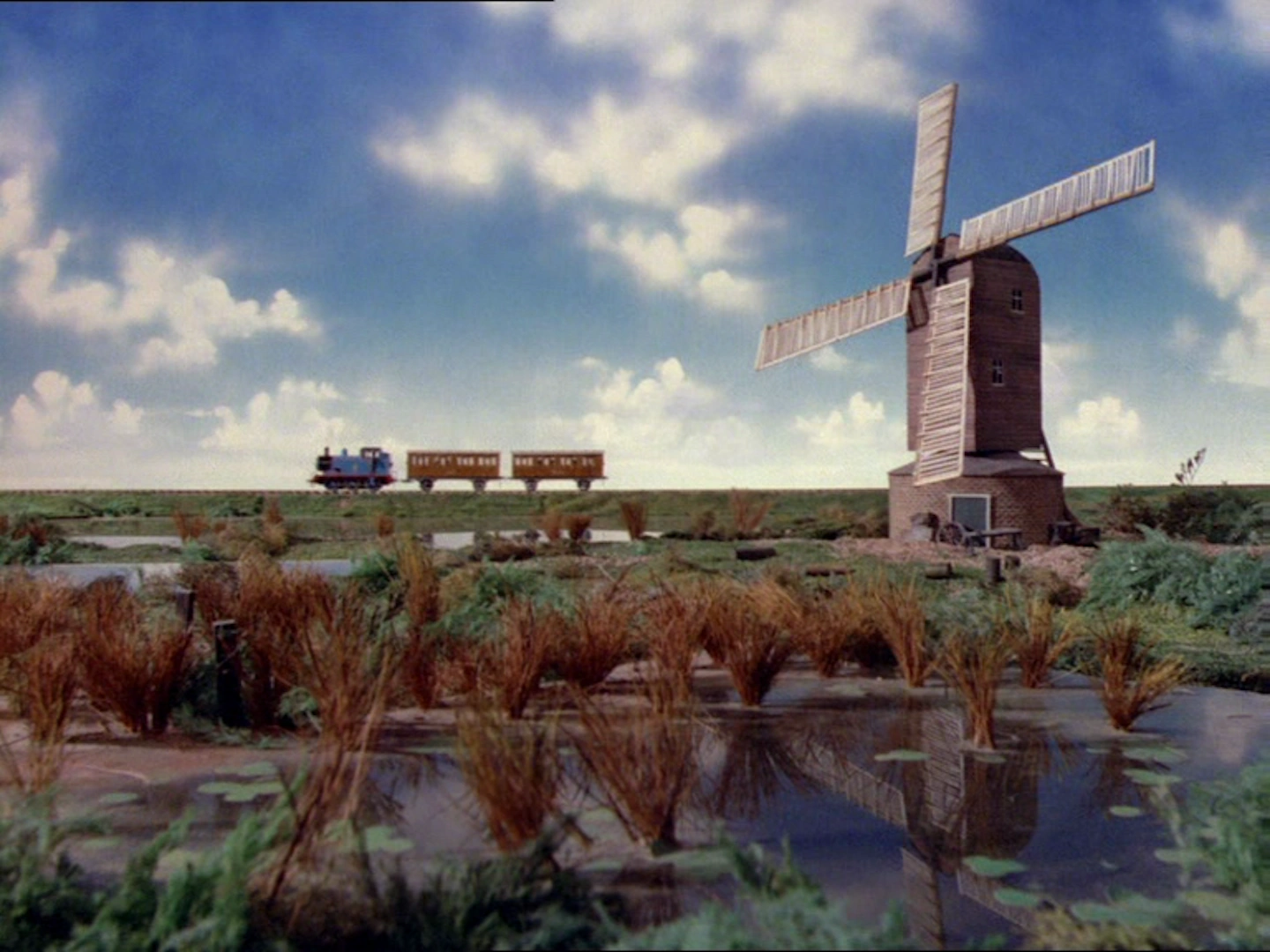
I'll add more when or if I see fit, but this should give you a good idea about what's going on around here.
This page features answers to basic questions for those not neck-deep in this franchise.
I'll add more when or if I see fit, but this should give you a good idea about what's going on around here.
The Railway Series is a collection of short stories written by the late Rev. Wilbur Awdry, and his son Christopher.
These stories follow the on-goings of the North Western Railway, a nationwide service on the fictional island nation of Sodor. The books are unique in that all the stories are from the perspective of the engines, rather than humans.
Yes and no.
The engines are not living, breathing organisms. They have a sort of soul, and with that some form of senses and feelings, but their faces are not physically there. Only a select few humans can 'see' and 'hear' them, and some can only percive one state and not the other. Think of it as a variant on the ways the toys in Toy Story seem to be 'alive' while still being 100% plastic, foam, felt, and otherwise.
No, and no. The engines are not people, and do not have rights. They are still treated just as people have always treated engines- and to a greater extent any objects in service to them- in this world.
However, the engines do not desire humanity or human rights, either. They only wish to be cared for well, as the creatures that they are. They're more akin to talking livestock, than the immediate equals people with a vague idea of the series immediately jump to them being.
To that end, while there is an argument to be made that the Hatt family and various other 'controllers' are emotionally and verbally abusive- which I myself believe, even despite the age of these books- it can not be argued that they are legitimate dictators. They're bad-to-mediocre pet owners, but not tyrants.
Despite being generally labeled as a series for human children, the Railway Series is distinctly and proudly nonhuman.
In many similar works where the characters are talking things/toys, there's always this extremely blatant, extremely human, projection marring it. Things aren't allowed to actually feel hurt by the behavior of their humans, they must be understanding and forgiving and never feel any lasting pain or suffering for being treated without care.
Things that are reasonably traumatized by the fact that they are lesser than lifeforms and exist to be in service to them are always treated as morally wrong when they want to recapture their humans' attention and love after being 'grown out of'. Getting torn or sunfaded or chewed up can't mean anything, and repairs- if they happen- also can't hurt. Not getting washed, repainted or looked after in decades is just being 'well loved', etc.
This franchise takes all of that and throws it away.
Getting scrapped is a real and tangible fear- having to work together to keep each other alive, to prove to their humans that they are worth the time, money and energy to keep alive is real. The obsession with being useful is real. The rampant casual ableism that they perpetuate against each other because broken and faulty engines, 'sick engines' actually are a cost to the railway, is real- and so are their relations in spite of that.
Breaking down hurts, getting repaired hurts and takes so much time and sometimes, is not a perfect fix. They have families that they are Absolutely Not okay with getting separated from, that they are Not okay with getting scrapped, that they Don't believe the humans' interests are best with, and that is something they have to just deal with. They have personal identities and attachments to their form that they Do Not trust humans to understand or preserve- and are sometimes threatened with losing those. They have nightmares about all of this and learn to have eachother's backs about it too.
They are engines first, and that's so refreshing for this old toy.